The Psychology of Fonts: Choosing the Right Typography
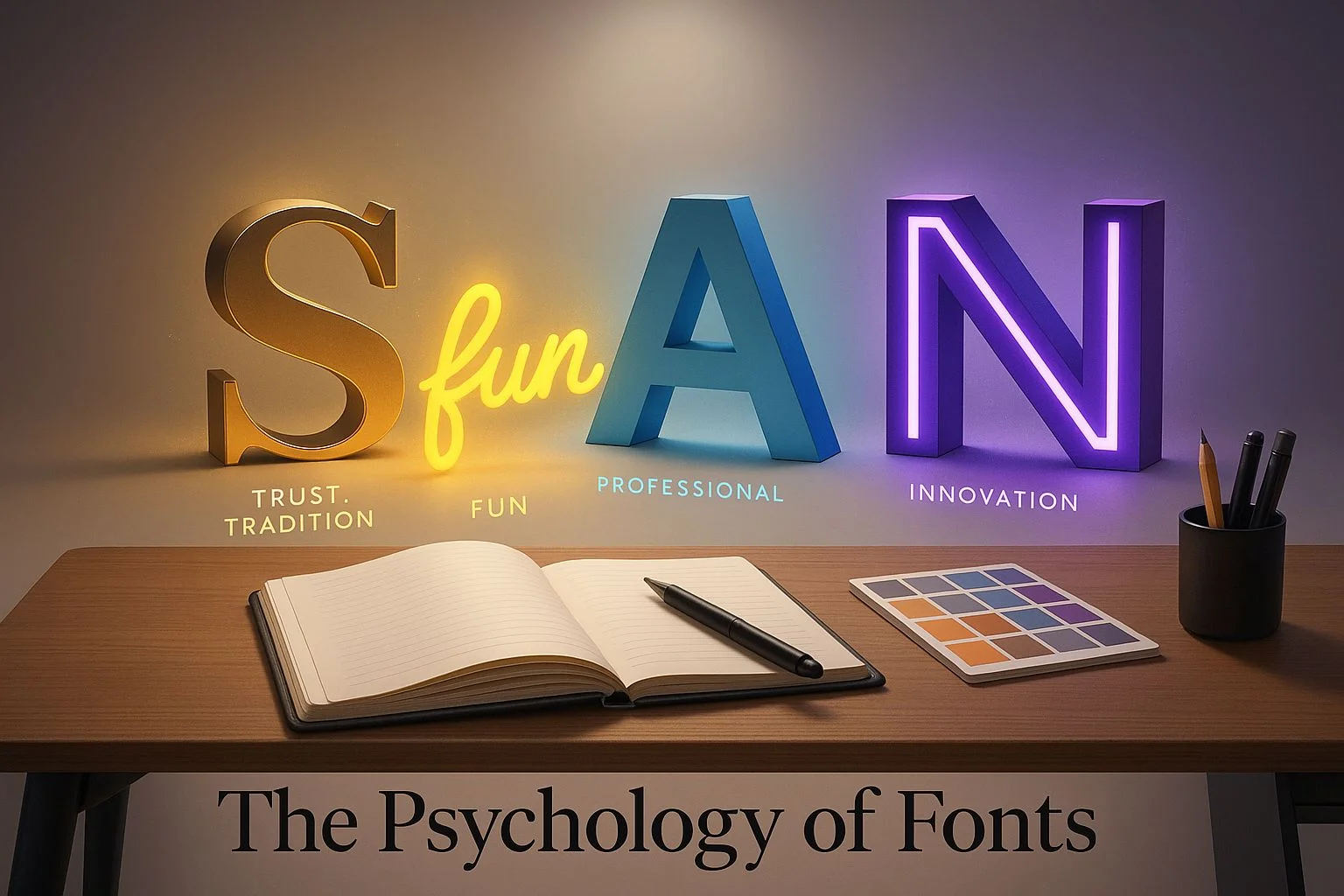
When you see the golden arches of McDonald's, the font feels playful and friendly. When you glance at the logo of The New York Times, it conveys tradition and authority. A simple shift in typography can completely change how you perceive a brand.
That's the power of font psychology.
Typography is not just about making text readable; it's about creating emotions, impressions, and trust. Every font choice speaks to the subconscious mind of your audience, influencing how they feel about your design — and even the brand itself.
Why Typography Matters
First impressions count: Viewers form an opinion in less than 0.2 seconds — and typography plays a massive role.
First Impressions Count
Viewers form opinions in 0.2 seconds
Fonts Influence Trust
Typography affects credibility judgments
Consistency Builds Brands
Unified typography strengthens identity
The wrong font can kill a great design. The right one can elevate it.
The Science Behind Font Psychology
Typography affects the brain the same way colors do — through emotional association. For example:
Researchers at MIT found that elegant, easy-to-read fonts increase comprehension and trust, while poorly chosen fonts lead to distraction and skepticism.
The Major Font Families and Their Meanings
Different font families convey specific emotions and meanings. Here are the five main categories:
Serif Fonts (e.g., Times New Roman, Garamond)
Sans Serif Fonts (e.g., Helvetica, Arial)
Script Fonts (e.g., Pacifico, Brush Script)
Display Fonts (e.g., Impact, Bebas Neue)
Monospace Fonts (e.g., Courier, Consolas)
How Fonts Influence Emotions
Fonts can evoke specific feelings even before words are read. Here's how different industries use typography strategically:
Luxury brands
→ Thin, high-contrast serifs (Tiffany & Co., Vogue)
Children's products
→ Rounded, playful fonts (Disney)
Tech companies
→ Clean sans-serifs (Apple, Microsoft)
Adventure brands
→ Bold display fonts (Nike campaigns)
The subconscious reaction to fonts is why font psychology is essential for branding.
Typography in Branding
Typography is one of the pillars of visual identity. Brands carefully select fonts to:
Build Recognition
Consistent typography creates memorable brand identity
Convey Personality
Font choice communicates brand values and character
Connect with Audience
Typography speaks directly to target demographics
Real Brand Examples:
Common Mistakes Designers Make with Fonts
Avoid these typography pitfalls that can derail your design:
Choosing the Right Font: A Step-by-Step Guide
Follow this systematic approach to select the perfect typography:
Define the brand personality
Is it playful, elegant, bold, or serious?
Consider the target audience
Teenagers vs. professionals vs. luxury buyers
Check readability
Works on both mobile and print
Test emotional impact
Does it feel trustworthy, exciting, modern?
Ensure scalability
Will it look good on business cards and billboards alike?
Always create 2–3 font pairings (headline + body + accent) for consistency across projects.
Typography Trends in 2025
Stay ahead of the curve with these emerging typography trends:
🔄 Variable Fonts
Adapt size, width, and weight dynamically
🤖 AI-Generated Fonts
Custom, brand-specific typography created by AI
📼 Retro Revival
'90s and vintage-inspired fonts making a comeback
🎯 Minimal Sans-Serifs
Still popular for digital-first brands
Frequently Asked Questions
Q1. What font type is best for beginners in graphic design?
👉 Sans-serif fonts like Helvetica or Montserrat are easiest to start with — clean, modern, and versatile.
Q2. How many fonts should I use in one design project?
👉 Stick to 2–3 fonts maximum (headline, body, accent).
Q3. Do fonts really affect sales and marketing?
👉 Yes. Typography shapes perception, influences trust, and can directly affect conversion rates.
Q4. Are free fonts safe to use?
👉 Use only from trusted sources (Google Fonts, Adobe Fonts) to avoid copyright issues.
Conclusion
Fonts are not just stylistic choices — they're psychological triggers that shape how people perceive brands and messages. By understanding font psychology, designers can craft visuals that not only look good but also connect emotionally with their audience.
In 2025, with the rise of AI-powered typography and global branding needs, choosing the right font is more crucial than ever.
✨ Master Typography Psychology at RedSketch Academy
At RedSketch Academy, our Digital Graphic Design Course and Next-Gen Graphic Design Mastery (AI Edge) programs teach students not only how to use fonts but how to think like brand strategists, ensuring their typography choices deliver impact, clarity, and emotion.