Creative Careers 2030: Skills in Demand Guide RedSketch Academy Industry Insights
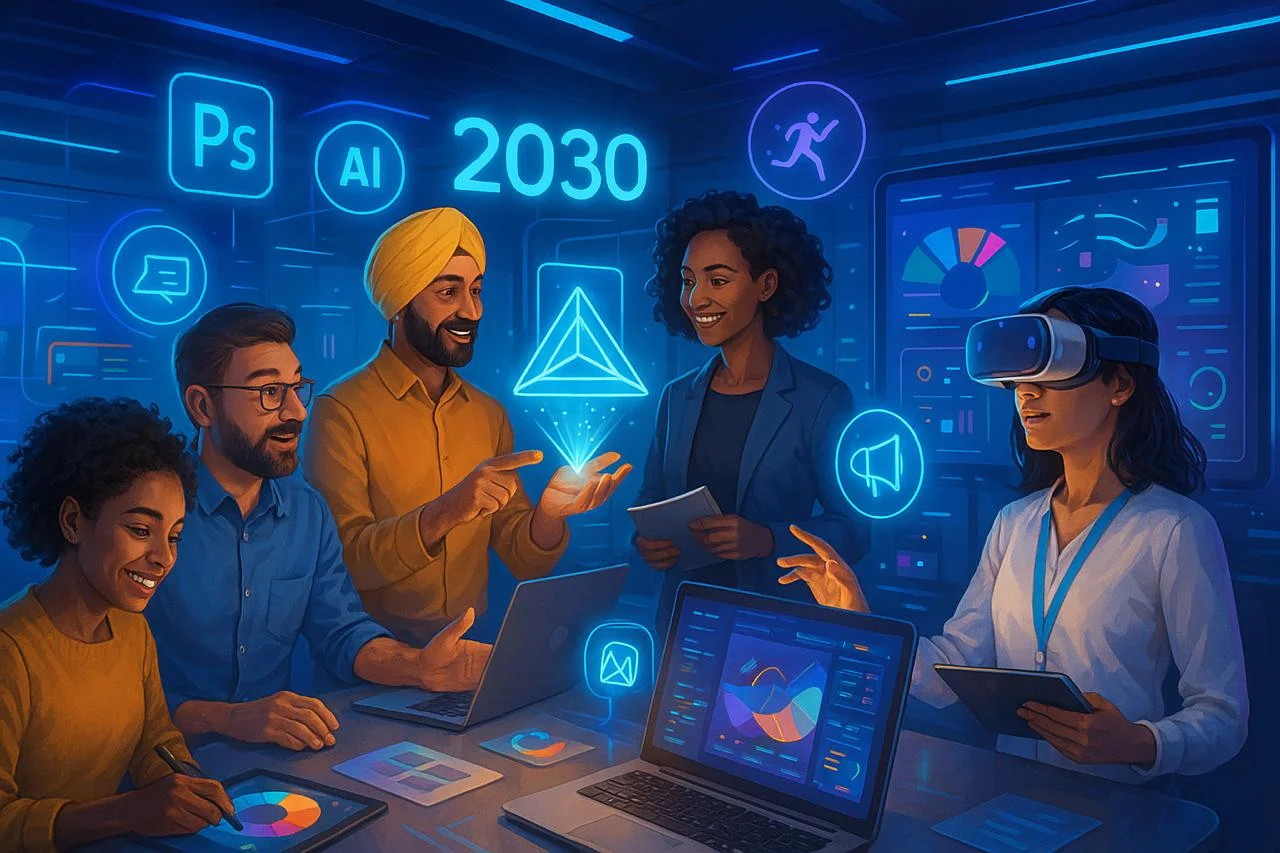
The creative industry has always been one of the fastest-changing career landscapes. From the print revolution to the rise of digital media, every decade reshapes what it means to be a successful creative professional. As we look ahead to 2030, one thing is clear: the next generation of designers, marketers, and media experts will need an entirely new set of skills to thrive in an AI-driven, hyper-connected world.
The question isn't just "Will my career survive?" but "How can I lead and innovate in the creative economy of the future?"
In this in-depth guide, we'll explore the skills companies will demand by 2030, why they matter, and how you can start building them today.
AI-Enhanced Creativity
By 2030, AI will be deeply embedded in every creative workflow. But instead of replacing designers, AI will become a co-pilot. Professionals who can guide AI with creativity and critical thinking will be irreplaceable.
Key Skills:
- Prompt engineering for visuals, video, and text
- Editing and refining AI-generated drafts
- Using AI for rapid prototyping and concept development
👉 Example: A designer in 2030 might sketch 10 logo ideas using AI, but the human touch will decide which one aligns with brand values and cultural context.
Human-Centered Design Thinking
Technology may evolve, but human emotions, needs, and aspirations remain the foundation of design. Human-centered design (HCD) will be even more valuable in 2030 as brands compete for authentic connections.
Key Skills:
- Empathy-driven storytelling
- Researching and understanding diverse user needs
- Designing for accessibility and inclusivity
👉 Example: A UX designer in 2030 will not just optimize interfaces but create emotionally intelligent experiences that feel human in an AI-heavy world.
Cross-Disciplinary Skills
The creative professional of 2030 will not be confined to a single medium. The industry will reward hybrid skills that merge design, storytelling, marketing, and technology.
Key Skills:
- Motion design + copywriting
- Video editing + AI marketing automation
- Graphic design + coding basics for AR/VR
👉 Example: A motion designer who also understands brand marketing will lead campaigns rather than just execute visuals.
Visual Storytelling Across New Mediums
Storytelling has always been at the heart of creativity — but in 2030, the canvas will expand dramatically:
AR & VR experiences
that immerse audiences
Mixed Reality (MR)
advertising campaigns
Holographic branding
in retail and live events
Key Skills:
- Mastery of immersive design tools
- Strong grasp of narrative structure
- Ability to simplify complex ideas into visual experiences
Cultural Intelligence & Global Collaboration
By 2030, creative teams will be even more global, and cultural intelligence will separate the good from the great.
Key Skills:
- Understanding cultural contexts in design
- Adapting campaigns for different global markets
- Collaborating with diverse, cross-border teams
👉 Example: A designer in India might work with clients in Japan and Brazil simultaneously — requiring cultural awareness to avoid tone-deaf or ineffective campaigns.
Additional Essential Skills for 2030
Sustainability and Ethical Creativity
The 2030 audience will reward brands that are socially responsible and sustainable. Creative professionals will need to think beyond aesthetics and embrace design ethics.
Advanced Digital Marketing + AI Integration
Marketing in 2030 will be fully data-driven, yet creativity will be the edge. Creative professionals will need to understand AI-powered marketing platforms.
The Rise of Soft Skills
As technology advances, human skills will be more valuable than ever. Companies will hire creatives for leadership and emotional intelligence.
Entrepreneurial Mindset
More professionals will choose freelancing or creative entrepreneurship. The most in-demand creatives will think like entrepreneurs.
👉 Example: A 2030 creative may design by day and run a micro-agency powered by AI tools by night.
Lifelong Learning & Adaptability
The skill that ties everything together is continuous learning. Tools and trends will evolve at lightning speed.
Frequently Asked Questions
Q1. What creative jobs will still exist in 2030?
👉 Roles like graphic designers, video editors, animators, and marketers will still exist — but redefined with AI integration and new media.
Q2. Will AI kill creativity by 2030?
👉 No. AI will automate tasks, but creativity, storytelling, and emotional intelligence remain uniquely human.
Q3. How should students prepare for creative careers in 2030?
👉 Build strong fundamentals in design and communication, while learning AI-powered tools and hybrid skills.
Q4. What industries will hire creatives in 2030?
👉 Tech, entertainment, healthcare, education, retail, and AR/VR-driven sectors will all demand creative expertise.
Conclusion
The year 2030 may feel far away, but the skills you start building today will decide your future. Creativity will always be in demand — but the definition of a "creative professional" will expand to include AI fluency, storytelling, ethics, and global collaboration.
The best way to future-proof your career? Blend timeless creative principles with future-ready tools.
Ready to Future-Proof Your Creative Career?
🚀 Future-proof your career. Start your journey with RedSketch today.
👉 At RedSketch Academy, our courses like Next-Gen Graphic Design Mastery (AI Edge) and MarketX – Future Marketing with AI are designed to prepare you for exactly this future. You'll learn design fundamentals, advanced AI-powered workflows, and personal branding skills to become a creative leader of 2030.
Related Career Insights
Graphic Design Trends 2025
Discover the latest design trends shaping the creative industry in 2025.
Read More →AI in Creative Industries
How AI is transforming graphic design and creative workflows in 2025.
Read More →