Soft Skills for Creative Careers 2025 - Master Professional Success at RedSketch Academy
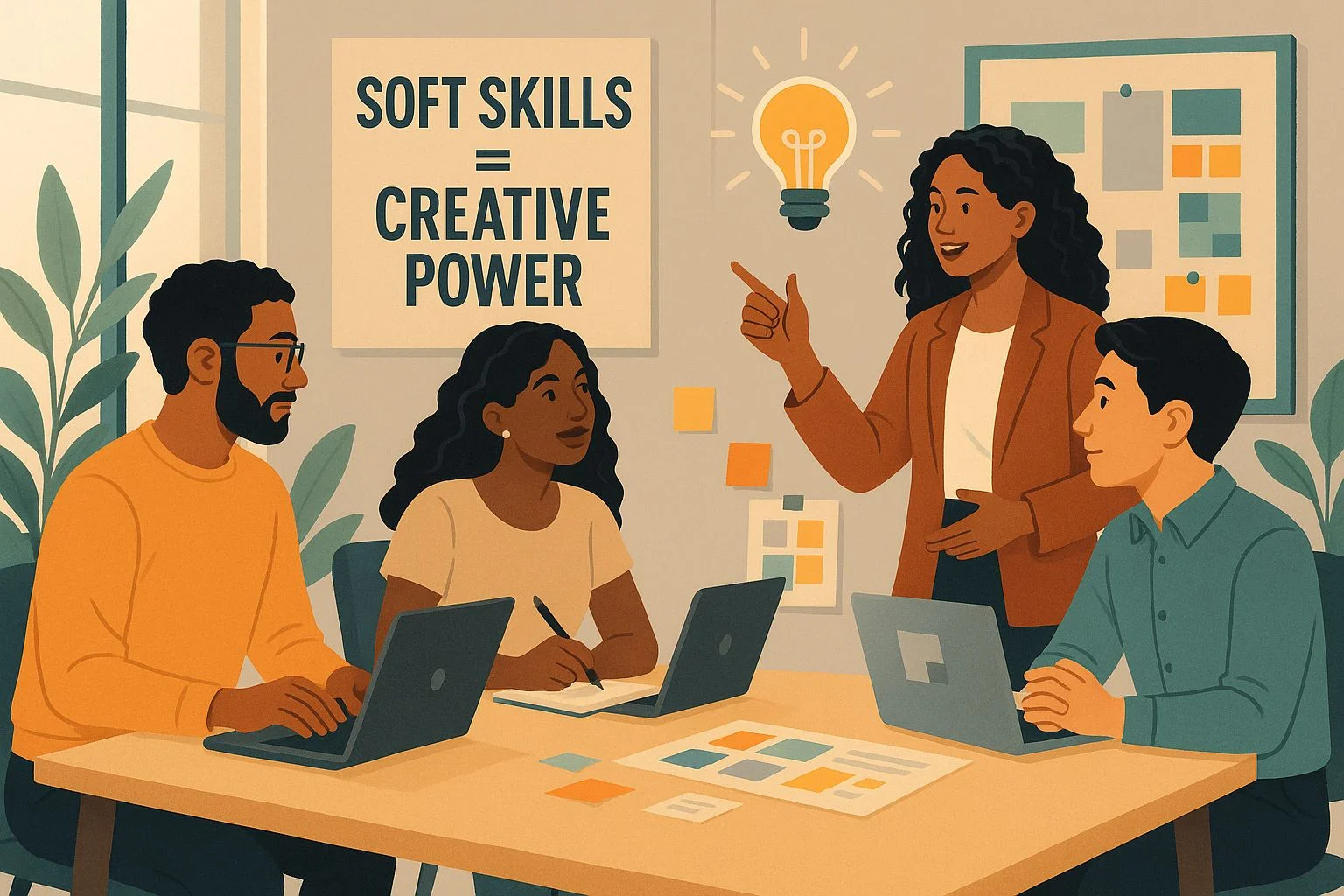
When we think about building a successful career in graphic design, video editing, animation, or marketing, the focus often lies on technical skills: mastering Photoshop, cutting videos in Premiere Pro, or creating animations in After Effects. But here's the reality of 2025: technical skills alone are no longer enough.
The creative industry thrives on collaboration, communication, adaptability, and problem-solving — qualities known as soft skills. They shape how you present ideas, handle feedback, manage deadlines, and work within teams. While software can be learned, soft skills define your career growth, leadership potential, and long-term success.
This article explores why soft skills are crucial in creative careers, the most important ones to develop, and how students can build them alongside technical mastery.
Hard Skills
Soft Skills
1. What Are Soft Skills in Creative Careers?
Soft skills are the interpersonal and behavioral skills that influence how you work with others and navigate challenges. In the creative industry, they go beyond just "being nice." They include:
Communication
Presenting ideas clearly to clients or teams
Teamwork
Collaborating with copywriters, marketers, developers
Problem-Solving
Finding creative solutions under tight deadlines
Adaptability
Handling ever-changing design trends and technologies
Emotional Intelligence
Understanding people, feedback, and client psychology
Leadership
Guiding teams and inspiring confidence
These skills complement technical expertise, ensuring you don't just create great work but also deliver it effectively.
2. Why Soft Skills Are Non-Negotiable in 2025
The creative industry has evolved dramatically:
Client Expectations Have Risen
Clients don't just want "good designs"; they want professionals who can understand brand voice, communicate ideas, and build trust.
Team-Based Projects Dominate
Whether it's a brand campaign or motion graphics ad, multiple creative roles work together. Collaboration is impossible without teamwork.
AI Can't Replace Human Interaction
While AI tools automate tasks, empathy, persuasion, and creativity are human-exclusive skills.
Career Growth Requires Leadership
Moving from designer to creative director is less about Photoshop shortcuts and more about leading people, pitching ideas, and inspiring clients.
Soft skills are the fuel that powers long-term creative careers.
3. Top Soft Skills Every Creative Professional Needs
1 Communication Skills
2 Teamwork & Collaboration
3 Problem-Solving & Critical Thinking
4 Time Management
5 Adaptability
6 Emotional Intelligence (EQ)
7 Leadership Skills
4. Real-World Scenarios Where Soft Skills Shine
Client Meeting
A designer with good communication can explain design choices and build trust, while one without may lose the client's confidence entirely.
Team Brainstorm
A collaborative animator suggests tweaks that elevate the project, while a rigid one causes delays and team friction.
Deadline Pressure
A video editor with problem-solving skills finds a smart workaround; another panics and misses delivery.
Career Growth
Two designers with equal technical skills apply for a senior role — the one with leadership and communication skills wins.
Soft skills often make the difference between being just an employee and becoming an industry leader.
Creative Team Collaboration
Effective communication and teamwork are essential for seamless collaboration across all these roles.
5. How Students Can Develop Soft Skills
At RedSketch Academy, we emphasize soft skills training alongside technical mastery. Here's how creative learners can start building them:
Practice Presentation
Regularly explain your design choices in class and build confidence in articulating ideas.
Group Projects
Work in teams to simulate real-world industry collaboration and learn to manage different perspectives.
Role-Playing Client Meetings
Faculty act as clients, students pitch ideas to build real-world presentation skills.
Time-Bound Assignments
Learn time management under realistic deadlines that mirror industry pressure.
Feedback Culture
Giving and receiving critiques builds confidence and emotional balance.
Communication Workshops
Beyond design tools, learn how to sell ideas and build client relationships.
6. The Career Advantage of Strong Soft Skills
Higher Employability
Employers prefer candidates who communicate well and fit team culture
Faster Promotions
Soft skills help transition from designer → team lead → creative director
Freelance Success
Freelancers need negotiation, client management, and persuasion skills
Networking Power
Building industry connections requires charm and collaboration
A portfolio shows your skills. But soft skills show your professionalism.
7. Common Mistakes Students Make with Soft Skills
Frequently Asked Questions
Q1. Why are soft skills more important now than before?
👉 Because creative work in 2025 is team-based, client-driven, and global. Technical skills open doors, but soft skills build careers.
Q2. Can soft skills be taught, or are they natural?
👉 They can absolutely be taught and practiced — through workshops, role-play, teamwork, and feedback exercises.
Q3. Which soft skill matters most for beginners?
👉 Communication — the ability to explain your creative choices with confidence.
Q4. Do employers really check for soft skills?
👉 Yes. Many recruiters say they prefer candidates with average technical skills but excellent soft skills over the opposite.
Conclusion
In the fast-paced world of creative careers, soft skills are the hidden superpower. They amplify your technical expertise, make you stand out to employers, and prepare you for leadership roles. Whether it's presenting a design idea, collaborating with teammates, or solving problems under pressure — soft skills transform good creatives into great professionals.
At RedSketch Academy, we don't just teach you Photoshop or video editing — we also help you build confidence, communication, teamwork, and leadership. That's why our students don't just graduate with skills; they graduate with careers.
👉 Ready to Become a Job-Ready Creative Professional?
At RedSketch Academy, we combine technical training with soft skills development to create industry-ready professionals. Our comprehensive courses include communication workshops, team projects, client interaction training, and leadership development — ensuring you graduate with both hard and soft skills.
Where creativity meets career success
Related Articles & Resources
Creative Careers 2030: Skills in Demand
Discover the most in-demand skills for creative professionals in the next decade and future career opportunities.
Read Article →Creative Personal Branding Guide
Build your personal brand as a creative professional and stand out in competitive markets.
Read Article →Getting Creative Jobs Without a Degree
Learn how to break into creative industries and land jobs using skills, portfolio, and networking.
Read Article →NextGen Graphic Design Program
Develop both technical design skills and professional soft skills for creative career success.
Explore Course →MarketX Hybrid Program
Learn communication, presentation, and client management skills essential for marketing careers.
Explore Course →Student Career Switch Success Story
Real student journey: How soft skills training helped transition from tech to creative design career.
Read Article →