Storytelling in Design: Turning Ideas into Visual Narratives
RedSketch Academy Design Theory - Master the art of visual storytelling and create designs that emotionally connect with audiences
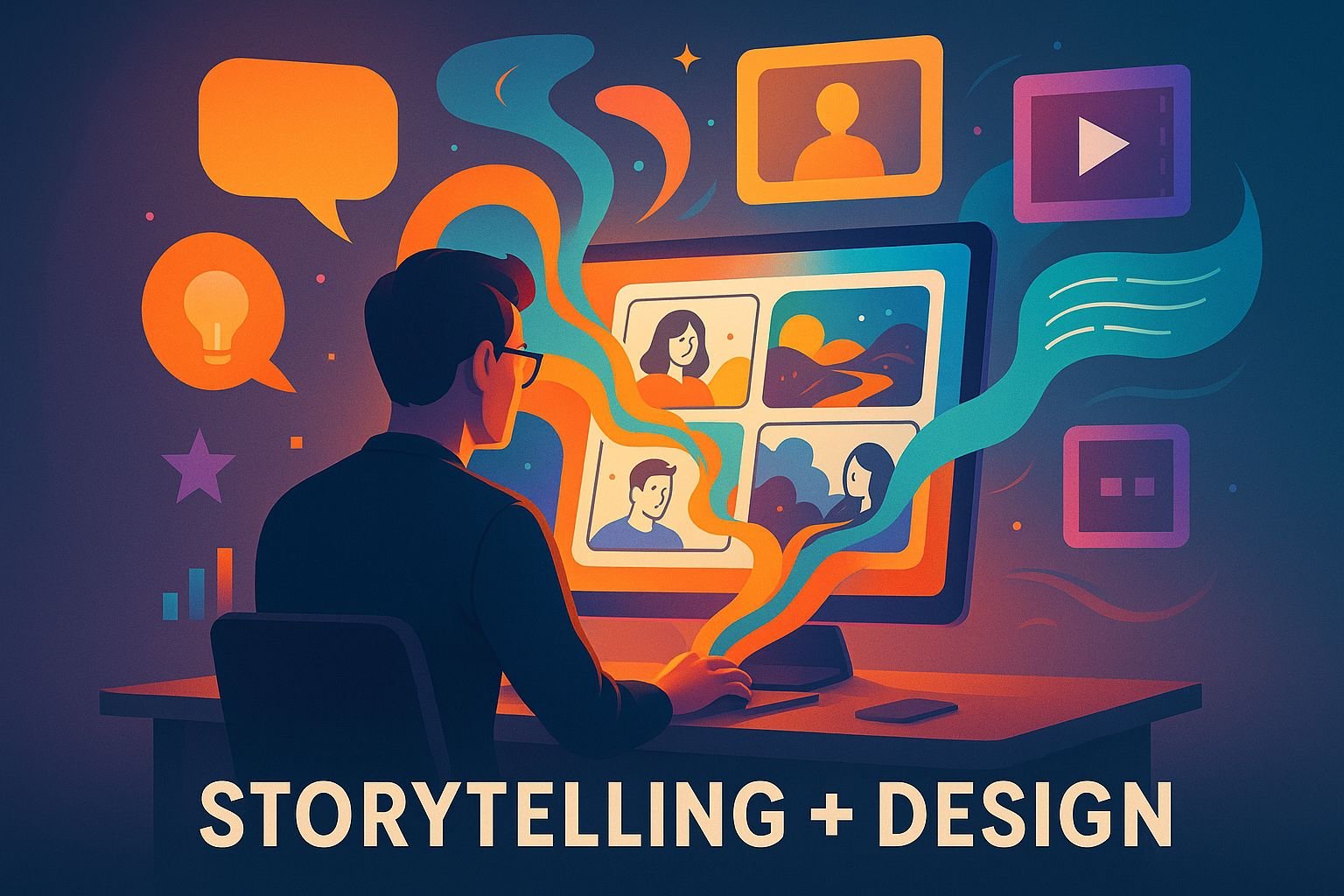
Every great design tells a story. From the curves of a logo to the colors of a poster, design is more than decoration — it is communication. In 2025, when audiences scroll past hundreds of images daily, what makes them pause is not just aesthetics but the story behind the design.
Storytelling in design is the art of turning abstract ideas into meaningful visual narratives. It goes beyond using images and typography; it's about evoking emotions, building connections, and making people remember your message long after they've seen it.
In this article, we'll explore how storytelling enhances design, principles to apply in your creative work, practical techniques, and how you can master this skill to become a more impactful designer.
Why Storytelling Matters in Design
Design without storytelling is like a book without words — it may look beautiful, but it lacks depth. Here's why storytelling is essential:
Emotional Connection
Stories tap into feelings, and feelings drive decisions
Memorability
People forget graphics, but they remember experiences
Clarity of Message
A strong narrative cuts through the noise
Brand Identity
Every brand is built on stories, and design is its visual voice
Nike's "Just Do It" campaigns are not about shoes; they are about perseverance and personal triumph. The visuals reinforce the story.
The Elements of Visual Storytelling
A strong design story blends multiple elements:
Characters (The Who)
Your design should reflect the people it's meant for.
Example: A poster for college students may use bold colors, modern typography, and relatable visuals.
Conflict (The Problem)
Every good story has a challenge. In design, this could be the problem your brand solves.
Example: A sustainable packaging design communicates the conflict between waste and eco-friendly choices.
Journey (The Process)
The progression from challenge to solution.
Example: An infographic that takes the audience step by step through how a product improves life.
Resolution (The Outcome)
How the design closes the story and leaves impact.
Example: A campaign banner ending with a strong call-to-action (CTA).
Techniques for Storytelling in Design
a) Color Psychology
Colors evoke emotions — red excites, blue calms, green reassures. Use them intentionally to enhance your story.
b) Typography as Voice
Fonts have personalities. A bold sans-serif feels modern and strong, while a handwritten typeface feels personal and emotional.
c) Visual Hierarchy
Guide the audience through your story with focal points, contrast, and spacing.
d) Imagery & Symbolism
Every image should serve a purpose. Symbols (like a lightbulb for ideas) can compress complex concepts into instant recognition.
e) Sequential Design
Think in terms of chapters — from social media carousels to storyboards, let your design unfold step by step.
Storytelling Across Design Disciplines
Graphic Design
Turning a brand's mission into consistent visuals (logos, posters, packaging)
UI/UX Design
Guiding users through a website journey that feels like a narrative
Motion Graphics
Adding literal story arcs through animation and pacing
Advertising
Making campaigns that resonate with personal aspirations or cultural narratives
Apple's minimal designs tell the story of simplicity, innovation, and lifestyle.
Common Mistakes in Design Storytelling
Overcomplicating visuals
Too much text, too many colors, too much noise
Ignoring the audience
A story that doesn't resonate is wasted effort
Style over substance
Beautiful but meaningless design has no staying power
Lack of consistency
Each design piece must connect to the larger brand story
How to Practice Storytelling as a Designer
The Future of Storytelling in 2025 and Beyond
AI tools are changing storytelling in design:
Generative AI
Helps produce instant visual drafts, but the story direction still comes from humans
Interactive Design
AR/VR allows audiences to experience stories, not just see them
Personalized Narratives
Designs can adapt in real-time to the user's behavior or culture
The designer's role is evolving from creator of visuals to curator of experiences.
Frequently Asked Questions
Q1. What is storytelling in design?
👉 It's the use of visuals, colors, typography, and layout to communicate a narrative that connects emotionally with the audience.
Q2. Can storytelling improve branding?
👉 Yes, strong brand stories create loyalty. Visuals are the fastest way to communicate those stories consistently.
Q3. Do beginners need storytelling skills?
👉 Absolutely. Storytelling is not advanced — it's foundational. Even a simple poster benefits from a clear narrative.
Q4. How do I learn storytelling in design?
👉 By practicing with real projects, analyzing successful brands, and combining creative exercises with tools like Photoshop, Illustrator, and AI design platforms.
Conclusion
Storytelling is what turns design from decoration into meaning. A poster, logo, or ad can be visually striking, but without a story, it won't connect deeply. By mastering storytelling techniques — from color psychology to narrative structure — you can craft designs that are not only seen but remembered and felt.
At RedSketch Academy, we help students move beyond tools and techniques to the art of storytelling. Our Visual Thinking & Ideation Mastery Course and Next-Gen Graphic Design Mastery (AI Edge) program teach you how to transform ideas into visual narratives that connect with real audiences and build powerful careers.
Enhance Your Design Thinking
Visual Thinking: Generate Creative Ideas
Learn powerful visual thinking techniques to enhance creative problem-solving and ideation processes.
Read More →Mastering Color Theory: Beginner Guide
Understand color psychology and theory to create emotionally resonant designs that tell powerful stories.
Read More →Psychology of Fonts & Typography
Discover how typography choices influence perception and enhance your visual storytelling abilities.
Read More →Visual Thinking & Design Courses
Comprehensive design programs including storytelling, visual thinking, and creative ideation modules in Jaipur.
Explore Courses →👉 Learn to Tell Stories the World Remembers
Master the art of visual storytelling and transform your designs from decoration into powerful communication that connects, inspires, and persuades.